Track 07 · House & museum · 2:47
The whole walk as one file · the route as GPX / KML / CSV · the podcast feed
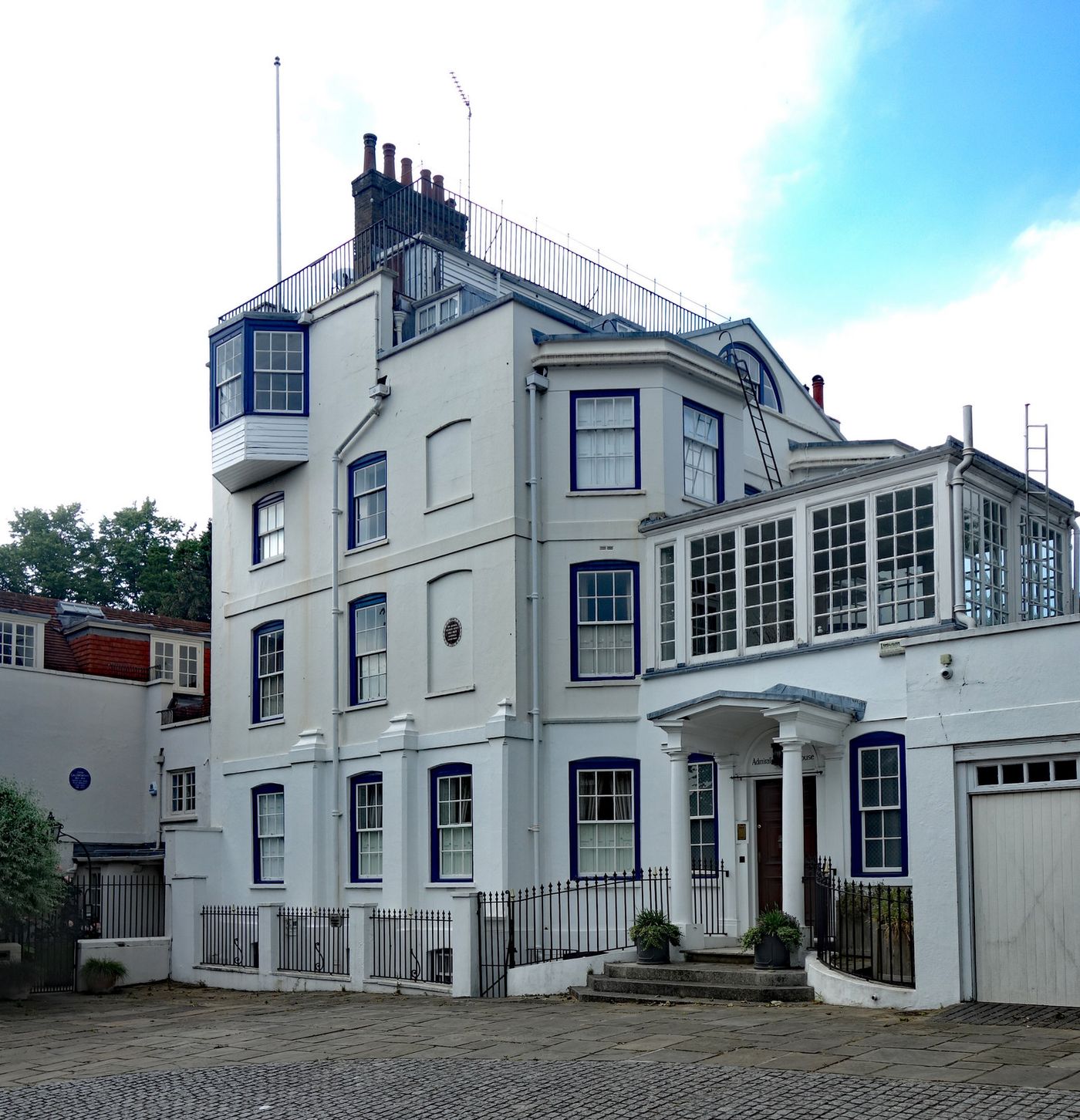

Stop six. Admiral's House.
Look at the roof. That is a quarterdeck, built on top of a house, four miles from the nearest tidal water, with a flagpole and a place to stand and take the salute. It is the least explicable roof in London.
The house went up in the early seventeen hundreds. In seventeen seventy five it was bought by Lieutenant Fountain North, of the Royal Navy, who added the quarterdeck and is said to have fired cannon from it to mark naval victories and royal birthdays, which cannot have been popular with the neighbours.
And now the correction, which is the whole reason to stand here. No admiral has ever lived in Admiral's House. There was a real admiral in Hampstead, Matthew Barton, and he also let off cannon, and at some point the village put the two men together and gave the house to the wrong one. The mistake then spread to the lane, which is why you are standing in Admiral's Walk. Nobody has ever bothered to correct it, and by now it would be vandalism.
Two people who took it seriously. John Constable painted this house again and again, and one of those paintings is in the Victoria and Albert. And George Gilbert Scott lived here from eighteen fifty six, which means the man who designed Saint Pancras station and the Albert Memorial was working out of a house pretending to be a ship.
One more. If you have ever seen Mary Poppins, you know a naval gentleman who fires a cannon from his roof and knocks the furniture over. This is where Admiral Boom comes from.
And look next door, at Grove Lodge. John Galsworthy lived in it from nineteen eighteen until he died in nineteen thirty three, wrote most of the Forsyte Saga in it, and took the Nobel Prize for literature out of it in nineteen thirty two. Two houses, sharing a wall, and between them a cannon and a Nobel.
There is also a plaque a little further down Hampstead Grove to George du Maurier, who lived there in the eighteen seventies and eighties and wrote Trilby, the novel that gave the language Svengali. Hold on to that name. His son is at stop twenty-three and his granddaughter wrote Rebecca.
Free, and private. Look from the lane and do not ring the bell.
Back to Hampstead Grove and keep going north. Lower Terrace runs off to the left, and at the end of it, behind a gate, on top of what looks like a grass-covered bunker, is stop seven.
51.55976, -0.18001 · where this is on a map