Track 16 · House & museum · 2:27
The whole walk as one file · the route as GPX / KML / CSV · the podcast feed
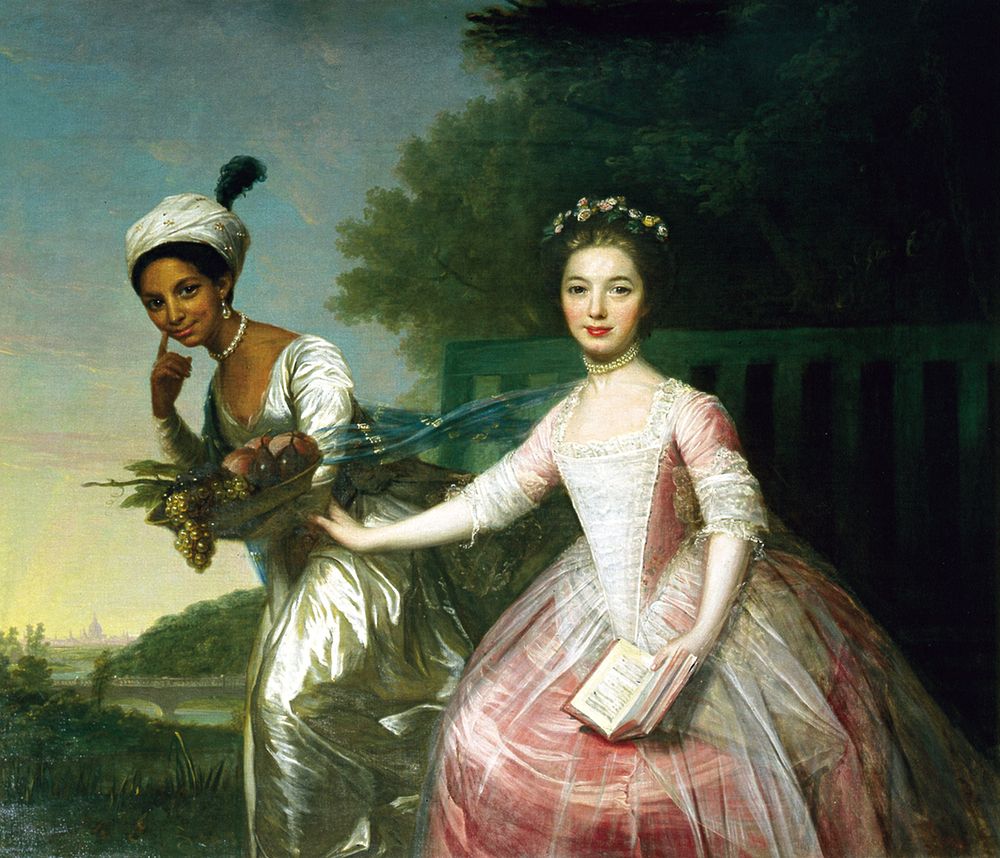

Stop fifteen. Dido Elizabeth Belle.
She was born in seventeen sixty one, the daughter of Sir John Lindsay, a naval officer and Lord Mansfield's nephew, and an enslaved woman called Maria Belle. She was brought to this house as a small child and she lived in it for about thirty years, raised alongside her cousin Elizabeth Murray, running the dairy and the poultry yard, and helping Mansfield with his correspondence. A visiting American described being unable to make sense of her position at the dinner table, which tells you rather more about him than about her.
The portrait shows the two cousins together and gives them equal weight, which for its date is close to unheard of. It was attributed to Zoffany for two centuries and turns out to be by a young Scot called David Martin. The original hangs in Perthshire now, so what you are looking at here is a copy.
And then the law. In seventeen seventy two Mansfield decided the Somerset case, in which an enslaved man in England was to be shipped to Jamaica and sold, and he ruled that it could not be done. It is the judgment everybody quotes as the end of slavery in England, and two things about that are worth getting straight while you are standing here.
The first is that the famous line, that the air of England is too pure for a slave to breathe in, was not Mansfield's. It was said by James Somerset's barrister, quoting a much older case, and it has been put in the judge's mouth by two hundred years of retelling. The second is that Mansfield's ruling was deliberately narrow. He tried repeatedly to make the parties settle so that he would not have to decide anything at all, and slavery went on being legal in the colonies for another sixty years.
He did free Dido in his will, explicitly, and left her money. He knew exactly what he had not done.
Out of the house by the south front and down across the lawn. Keep the lake on your right, follow the path east out of the estate, and pick up Millfield Lane heading south. Eight minutes. The gate on your right is stop sixteen, and if you are a man you are not going through it.
51.57155, -0.16734 · where this is on a map